A Fed That’s Gone From Cutting to Possibly Hiking
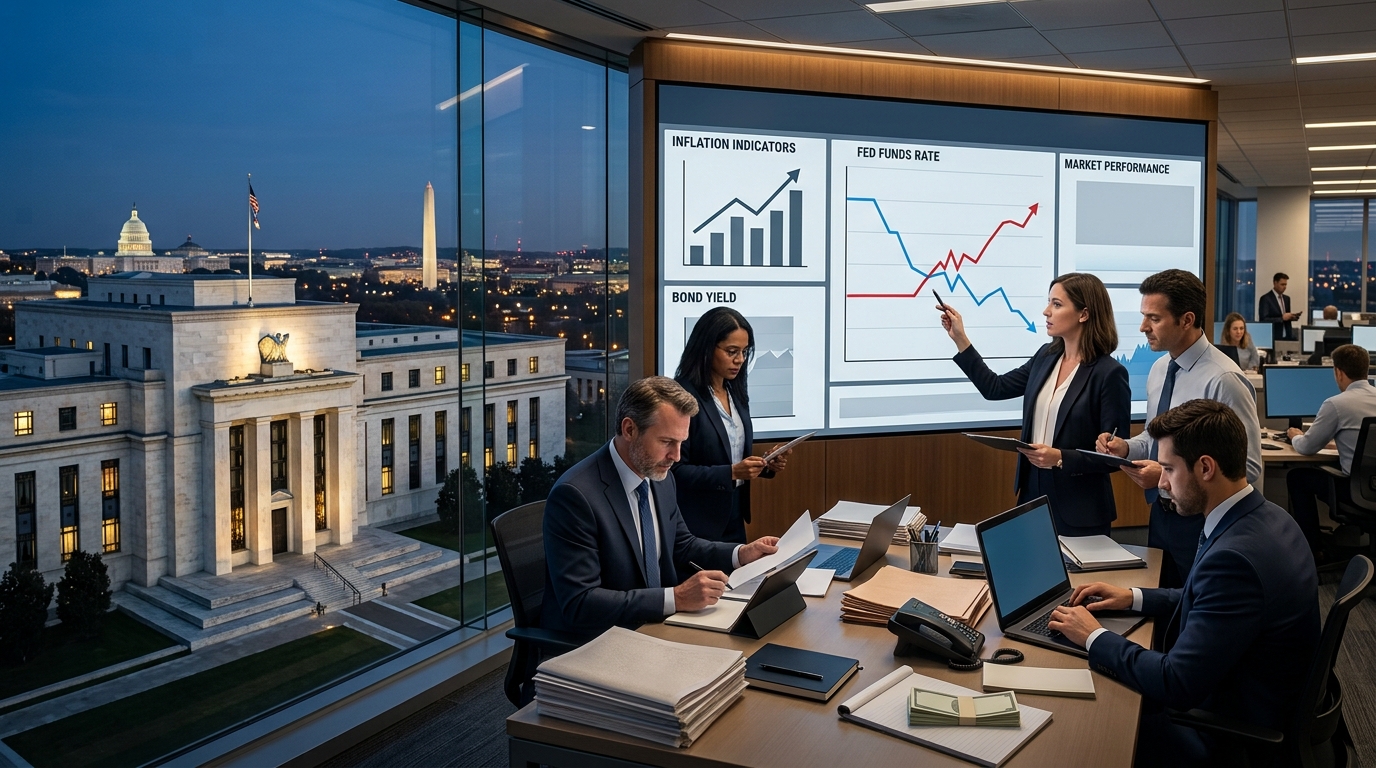
Six months ago, markets were pricing in rate cuts through 2026. Now, heading into the Federal Reserve's July 29 policy announcement, the conversation has flipped entirely: several major banks are now forecasting additional hikes before year-end. It's one of the sharper monetary policy reversals in recent memory, and it's happening under a Fed chair who's been in the job only a matter of months.
Where Rates Stand Right Now
| 🏦 Detail | 📊 Current Status |
|---|---|
| 💵 Federal Funds Rate | 3.50%–3.75% |
| 📅 Consecutive Meetings Without a Change | Four meetings with no rate adjustment. |
| 👤 Fed Chair | Kevin Warsh (serving since 2026). |
| 📈 2026 PCE Inflation Projection | Raised to 3.6% from the previous 2.7% forecast. |
| 🗓️ Next Decision Date | July 29, 2026 |
| 📉 Market-Implied Odds of July Hike | Approximately 25–30%. |
Why the Outlook Flipped So Fast
The shift traces largely to the change in Fed leadership. Under new Chairman Kevin Warsh, the central bank has signaled a notably more hawkish approach to inflation management than markets had priced in earlier in the year. The Fed's own upward revision to its 2026 PCE inflation projection — from 2.7% to 3.6% — is the clearest institutional signal that policymakers see price pressures as more persistent than previously assumed, a view reinforced by resilient labor market data and ongoing supply chain disruptions that have eroded the Fed's patience with a "higher-for-longer" stance.
What Wall Street Is Forecasting
Bank forecasts diverge on timing but agree on direction. Bank of America is projecting three separate 25-basis-point increases across September, October and December 2026, while Deutsche Bank forecasts two additional hikes before year-end. For the July 29 meeting specifically, market pricing has fluctuated between roughly 25% and 30% odds of an immediate hike, with "no change" remaining the dominant expected outcome for this particular meeting — the real question is what the Fed signals about September and beyond.
What’s Driving the Inflation Concern
Beyond domestic demand and labor market resilience, policymakers have pointed to geopolitical uncertainty — including ongoing conflicts in the Middle East — as a contributing factor to persistent price pressure, alongside supply chain disruptions that have proven more durable than expected. Combined, these forces have pushed the Fed away from the rate-cutting path markets expected at the start of 2026 and toward a stance focused squarely on price stability, even at the cost of slower growth.
Market Impact So Far
Equities
Growth stocks have faced renewed pressure as markets discount future earnings at higher rates, with rising long-term Treasury yields hitting valuation-sensitive sectors — technology, real estate and utilities — hardest.
Fixed Income
Bond markets have seen the yield curve steepen, with longer-term yields rising faster than short-term rates as investors price in the possibility of hikes later in the year rather than the cuts they'd expected.
Financials
Bank stocks are among the few sectors positioned to benefit from a higher-for-longer environment, given the potential for improved net interest margins if the hawkish pivot holds. A sustained higher-rate environment also raises the cost of financing corporate M&A — a factor at play even in comparatively modest deals like Kroger's $1.65 billion acquisition of Giant Eagle.
Expert Analysis
The divergence between Bank of America's three-hike forecast and Deutsche Bank's two-hike call underscores genuine uncertainty about how far Chair Warsh is willing to go — minutes from the Fed's June meeting reportedly showed real division among officials themselves, with some expecting inflation to ease naturally and others anticipating the need for further tightening. That internal split is itself a signal: this isn't a Fed that has settled on a clear forward path, which means each incoming inflation and labor report between now and September carries outsized weight for markets.
What Investors Should Watch For
- The July 29 policy statement language — subtle wording shifts around "patience" or "further tightening" will matter more than the rate decision itself if, as expected, rates hold steady.
- Chair Warsh's press conference tone — given his more hawkish reputation, any explicit reference to September as a "live" meeting would confirm bank forecasts of near-term hikes.
- Incoming CPI and PCE data before the September meeting, which will likely determine whether one, two, or three hikes actually materialize.
- Labor market resilience — continued strength gives the Fed more room to prioritize inflation over growth support.
Timeline
- Early 2026: Markets broadly expect the Fed to begin cutting rates through the year.
- 2026: Kevin Warsh becomes Fed Chair, signaling a more hawkish policy approach.
- June 18, 2026: Fed communications indicate stronger growth and elevated inflation, shifting rate-cut expectations.
- June 2026 FOMC meeting: Rate held at 3.50%-3.75%; minutes later reveal internal division among officials.
- July 28-29, 2026: The Fed's next FOMC meeting, with the rate decision announced July 29 at 2:00 PM ET.
- September-December 2026: Bank forecasts point to as many as three additional rate hikes.
Future Outlook
Barring a sharp and sudden inflation cooldown, the path of least resistance appears to be a Fed that holds steady on July 29 while using its statement and press conference to lay groundwork for a possible September hike. Investors should prepare for continued volatility around each incoming data release between now and then, since the Fed's own internal division means market expectations are likely to keep swinging as new information arrives.
Frequently Asked Questions
When is the Fed’s next interest rate decision?
July 29, 2026, following a two-day FOMC meeting on July 28-29.
Is the Fed expected to raise rates in July?
Market pricing suggests roughly 25-30% odds of a July hike, with "no change" remaining the more likely outcome for this specific meeting.
Why did rate-cut expectations turn into rate-hike expectations?
A more hawkish approach under new Fed Chair Kevin Warsh, combined with a sharp upward revision to the 2026 inflation projection, shifted market expectations from cuts to possible hikes.
How many rate hikes are banks forecasting for 2026?
Bank of America projects three 25-basis-point hikes (September, October, December), while Deutsche Bank forecasts two additional hikes before year-end.
What sectors are most affected by the hawkish shift?
Growth-sensitive sectors like technology, real estate and utilities face the most pressure, while financial stocks could benefit from improved net interest margins.
Who is the current Federal Reserve Chair?
Kevin Warsh, who took over the role in 2026 and has signaled a more hawkish inflation stance than markets initially expected.
What is the Fed’s current inflation projection for 2026?
The Fed raised its 2026 PCE inflation projection to 3.6%, up from a previous estimate of 2.7%.
Key Takeaways
- Market expectations have flipped from anticipating Fed rate cuts to bracing for possible hikes later in 2026.
- The federal funds rate has held at 3.50%-3.75% for four consecutive meetings, with the July 29 decision unlikely to change that.
- Bank forecasts diverge on timing but broadly agree on up to three additional hikes by year-end.
- Internal division among Fed officials, revealed in June meeting minutes, means the outlook remains genuinely uncertain heading into September.
References
- Federal Reserve (FOMC communications)
- Bank of America research
- Deutsche Bank research
- Polymarket