


Kimi K3: Moonshot AI’s Record 2.8T Open-Source Model
China’s Moonshot AI has released Kimi K3, a 2.8-trillion-parameter open-source model that independent benchmarks show rivaling the best proprietary systems from OpenAI and Anthropic.

SharePoint Zero-Day Under Attack: CISA’s July 19 Deadline
A critical SharePoint zero-day, CVE-2026-58644, is under active attack with a July 19, 2026 federal patch deadline — here’s what it does and the steps to take right now.

Agentic AI Puts $234B in SaaS Spending at Risk: Gartner
Gartner says agentic AI puts $234 billion in enterprise SaaS spending at risk as AI agents bypass software interfaces entirely — here’s what that means for vendors and buyers alike.

PlayStation Ends Physical Game Discs Starting 2028
Sony will stop producing physical PlayStation game discs starting January 2028, ending three decades of boxed games — here’s what’s changing and what’s still coming on disc before then.

Samsung’s July 22 Unpacked: Z Fold 8 and a “Wide” Surprise?
Samsung’s July 22 Unpacked event is set to unveil the Galaxy Z Fold 8, Z Flip 8, and reportedly a wider “Z Fold Wide” model — timed squarely ahead of Apple’s rumored foldable iPhone.

WhatsApp Business API for Garment Shops: 2026 Guide
A complete 2026 guide to how garment shops, boutiques and fashion retailers use WhatsApp Business API to automate order updates, run festival broadcasts, and turn one-time buyers into repeat customers.
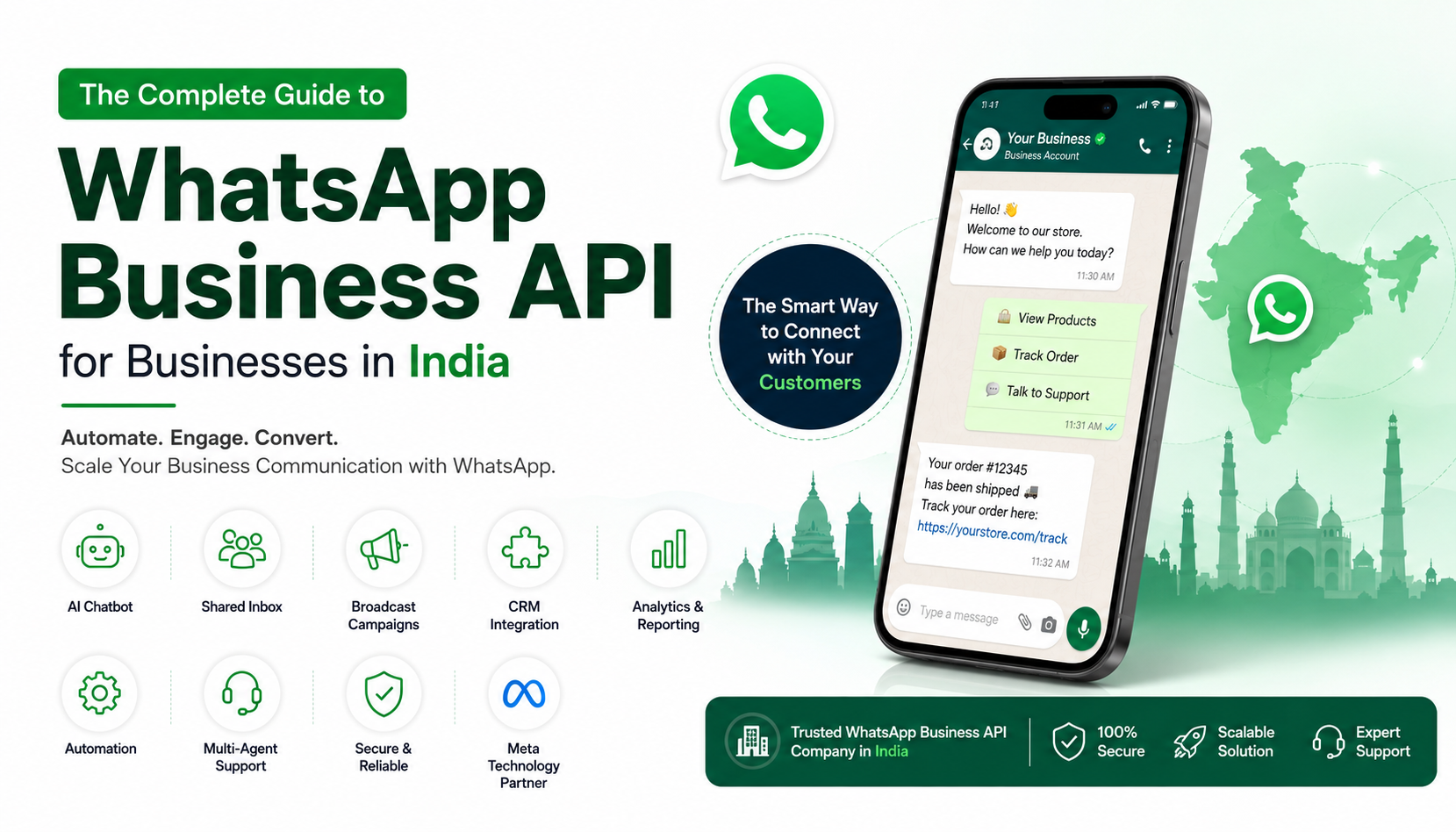
WhatsApp Business API Companies in India: Complete Guide for Businesses (2026)

How to Add Country Code to Phone Numbers in Excel Automatically – No 1 Free Tool for Bulk Formatting
Will Navic Replace GPS in India
In order to incorporate location tracking based on India's own navigation system, Navigation with Indian Constellation (NavIC), into a few of its chipsets, Qualcomm has teamed with ISRO. We will have devices in India in the first half of 2020 that use NavIC in addition to constellations like GPS and GLONASS for position tracking.
The Indian government is pressuring smartphone manufacturers to include support for its NavIC navigation system in newly released smartphones that will be marketed in the nation starting in 2019. This effort has alarmed the industry because of the higher expenses and short timeline.
What is NavIC GPS Tracker
NAVIC, which stands for Navigation with Indian Constellation, is the official name of the Indian Regional Navigation Satellite System (IRNSS). The regional geo-positioning system was developed by ISRO in India to offer precise positioning within and around the Indian subcontinent.
Why NavIc was Developed when we already had GPS
One of the first things the Indian military looked for after Pakistani troops occupied Kargil in 1999 was the GPS data for the area. The US denied India access to its space-based navigation system, which would have given it crucial information. Prior to the Kargil incident, the country was aware of the necessity for an indigenous satellite navigation system.
According to India, the purpose of NavIC was to end reliance on foreign satellite systems for India’s navigation service fulfilment, particularly for "strategic sectors as well as defence areas."
Is navIC Indian GPS App
Yes, NavIC is Indian and is developed by the Indian Space Research Organisation (ISRO). At a cost of $174 million, NavIC was initially approved in 2006.
When NavIC Was launched
It was originally planned for the satellite system to be completely operational by 2012; however, due to a number of obstacles, this did not happen. In 2013, the first of the seven satellites was sent into orbit.
Is navIC available for Public Use
The use of NavIC is currently restricted. It is used for tracking and delivering information about natural disasters, providing emergency warning alerts to fishermen travelling into the deep sea where there is no terrestrial network connectivity, and public vehicle tracking in India.
The next stage that India is pushing for is to enable it on smartphones.
Why Navic was not used till now
Navic is used in certain areas. It has hardware. Navic needs a certain chipset to get enabled in devices. Government has asked the mobile developers to be ready for NavIC and construct their devices with NavIC capability.
Which is better NavIc or GPS
NavIC is compared to the US-based GPS, the Russian Glonass, and the European Galileo because it has seven satellites. In the main service region, the IRNSS is anticipated to deliver position accuracy that is greater than 20 metres. On the other hand, GPS-enabled smartphones with 24 satellites can be precise to within 4.9 metres. However, accuracy will decline near structures like buildings, bridges, and trees.
GPS accuracy is also impacted by cloud cover. The precision of certain GPS receivers can reach 11.8 inches. It is claimed, however, that the NavIC system employs both the S and L bands, as opposed to GPS, which only uses the L band. According to reports, this makes NavIC more accurate than GPS.
The USA maintains the GPS, or Global Positioning System, which tracks locations all around the world. The constellation currently has about 31 satellites in orbit and needs 24 satellites to be operational. These are all geosynchronous satellites, which means that they are all moving with the earth's rotation in space. Calculations are a little bit more difficult with GPS because it only utilises a single frequency band. Whereas 3 geostationary satellites and 4 geosynchronous satellites, all of which are located in far higher orbits, are part of India's Navic programme (signal is less prone to obstructions). Due to the two frequency bands (L5-band and S-band) used by NavIC satellites, the system is comparatively more accurate than GPS (that uses a single band and makes compensation for error due to signal deterioration by the atmosphere).
How NavIC Works
IRNSS-1A, IRNSS-1B, IRNSS-1C, IRNSS-1D, IRNSS-1E, IRNSS-1F, IRNSS-1G, and IRNSS-1I are the eight satellites that make up NavIC at this time.
Actually, Navic was scheduled to have 7 satellites plus 2 backups, but the first satellite, IRNSS 1A, had a broken atomic clock, and an attempt to launch IRNSS 1H to replace it was unsuccessful. IRNSS 1A was finally replaced by IRNSS 1I, completing the constellation, which was launched later.
Future ISRO satellites will be equipped with locally produced Atomic clocks to further enhance NavIC.
NavIC applications passes the gps info received from navic constellation to google map or Other navic map services to get a clear view of location.
How Mobile Industry is going to effect with NavIC Launch
Realme, a Chinese smartphone manufacturer, has unveiled the Realme X50 Pro, a 5G smartphone model. This is one of the most expensive phones offered by the firm in India, with a starting price of Rs 37,999. In addition to 5G, it has India's own navigation system, which is a unique feature. The desi navigation system, known as NavIC, offers a tonne of functions.
Since Qualcomm has already developed three chipsets that support NavIC, more phones with NavIC capability may soon be released in India.
Government has notified mobile companies to develop mobile phones with NavIC enabled.
Conclusion
In addition to GPS, three other navigation systems with global coverage exist: China's Beidou, GLONASS, controlled by Russia, and the European Union's Galileo. Another regional navigation system covering Asia and Oceania with a focus on Japan is QZSS, which is run by Japan. It is good to have a local or inhouse GPS system for any country as per security and emergency perspective. So India should definitely go ahead with their local GPS system NavIC.

US EV Sales Decline 20% Even as Global Demand Keeps Rising
US EV sales fell 20% in Q2 2026 after the federal tax credit expired, even as global EV sales kept climbing — driven largely by China, where 55% of auto sales are now electrified.

Meta’s Muse Image Comes to Advantage+ for Advertisers
Meta’s new Muse Image AI model is rolling out to Advantage+ creative, letting 8 million-plus advertisers auto-generate and restyle ad images — here’s what it does and the privacy questions trailing it.

Google Reshapes AI Overviews With News Carousel, New Tools
Google added a live news carousel and AI-generated images to AI Overviews in July 2026, while Search Console quietly expanded the tools site owners can use to track their presence there.

EU Finds Meta’s “Addictive Design” Breaches the DSA
The EU says Instagram and Facebook’s infinite scroll and autoplay breach the Digital Services Act, exposing Meta to fines up to $12 billion — here’s exactly what Brussels wants changed.

Amazon’s June Prime Day Shift and the July Sales Lull
Amazon moved Prime Day to late June for 2026, driving a record $26.4 billion in US e-commerce sales — and leaving merchants to navigate the quieter July “lull” that followed.

The Batman Part II Delayed Again — Now Set for 2028
The Batman Part II has been delayed a fourth time, now landing February 18, 2028 — but a new camera-test teaser proves Robert Pattinson is already back in the cowl.

Apple Sues OpenAI Over Alleged Hardware Trade Secret Theft
Apple has sued OpenAI for trade secret theft over its unreleased hardware plans, alleging a coordinated effort reaching from OpenAI’s hardware chief down to its recruiting process.
Kimi K3: Moonshot AI’s Record 2.8T Open-Source Model
China’s Moonshot AI has released Kimi K3, a 2.8-trillion-parameter open-source model that independent benchmarks show rivaling the best proprietary systems from OpenAI and Anthropic.
SharePoint Zero-Day Under Attack: CISA’s July 19 Deadline
A critical SharePoint zero-day, CVE-2026-58644, is under active attack with a July 19, 2026 federal patch deadline — here’s what it does and the steps to take right now.

Kroger to Acquire Giant Eagle in $1.65 Billion Deal
Kroger is acquiring regional grocer Giant Eagle for $1.65 billion — a far smaller, lower-risk deal than its failed Albertsons bid, and the first major move under CEO Greg Foran.