Meta Just Stopped Renting Its Ad-Creative AI and Started Building Its Own
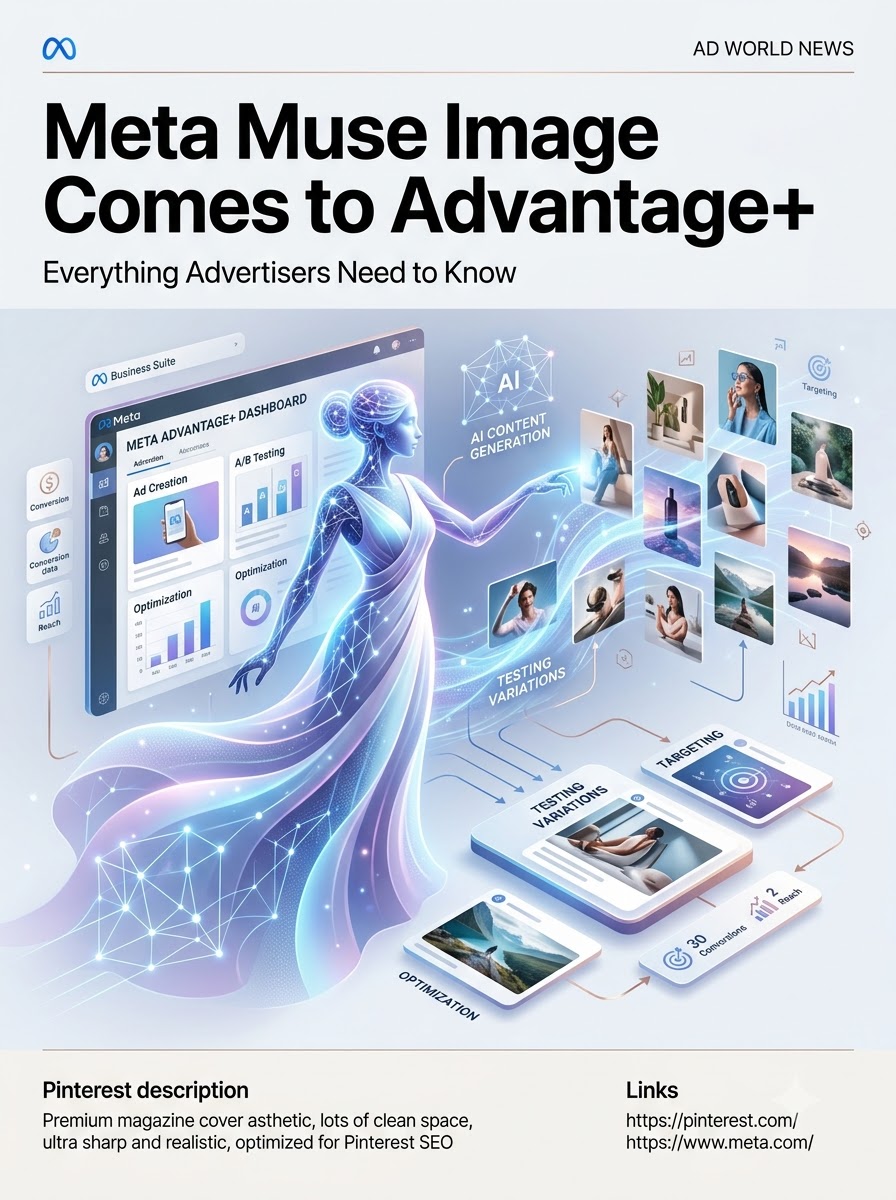
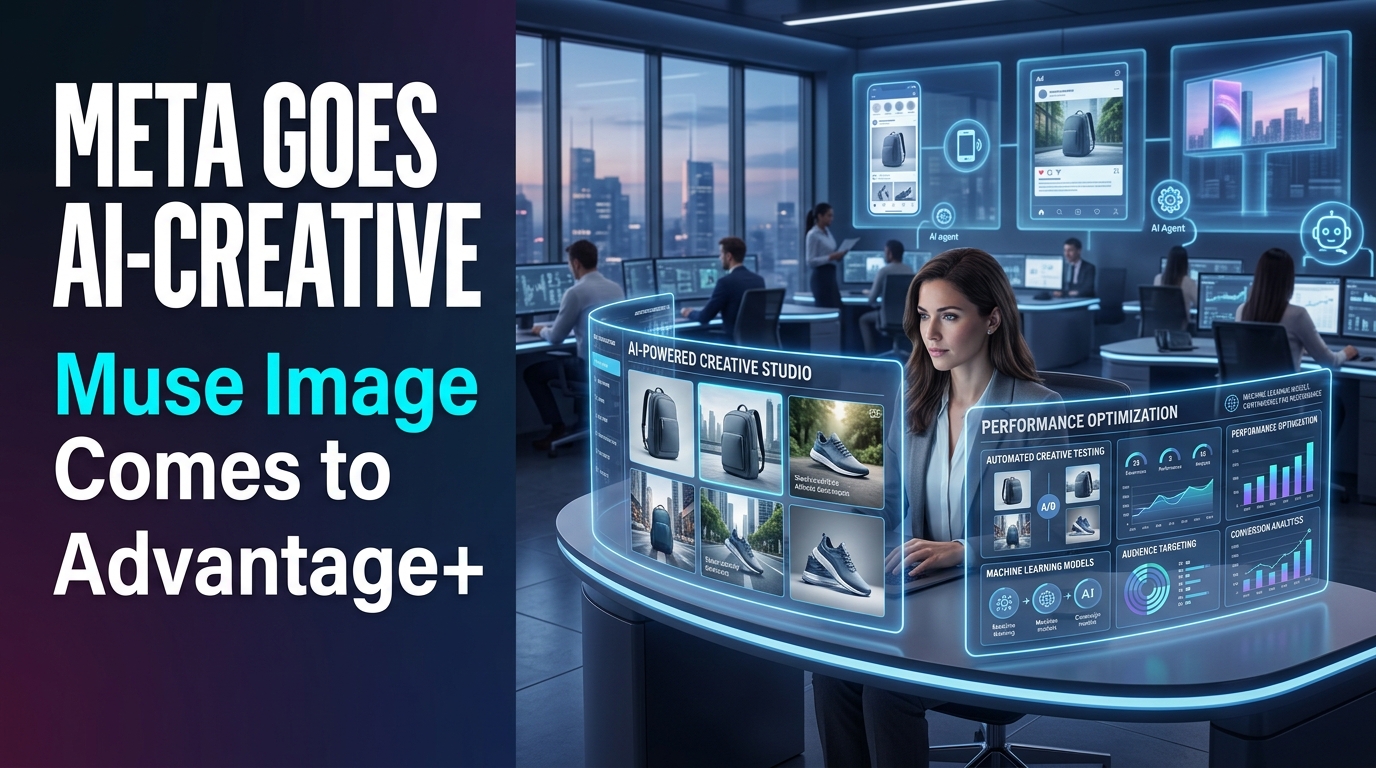
For years, when Meta AI generated an image inside Facebook or Instagram, there was a good chance a third-party model from Midjourney or Black Forest Labs was doing the actual work behind the scenes. That changed on July 7, 2026, when Meta launched Muse Image — the first image generation model built entirely by Meta Superintelligence Labs — and began rolling it into Advantage+, the AI-powered ad tool more than 8 million advertisers already rely on for creative production.
What Muse Image Actually Does for Advertisers
| Capability | Detail |
|---|---|
| Restyling existing ad images | Generate new variations of existing creative in different visual styles. |
| Video-to-still extraction | Generate static images directly from existing video ad assets. |
| Reported performance lift | Meta cites +2–3% conversion lift from background generation and +13% from related-media variants. |
| Rollout mechanism | Available through Advantage+ Creative in the coming weeks. |
| AI creative tool users | 8 Million+ advertisers already use Meta AI creative tools. |
Meta describes Muse Image as built with "agentic visual reasoning and self-refinement" — meaning it's designed to understand a full creative brief the way a human designer would, rather than responding to isolated keywords one at a time. In practice, that's meant to let advertisers iterate conversationally: adjusting specific elements, swapping styles, or refining a generated image through follow-up instructions rather than starting over with a new prompt each time.
Where Muse Image Sits Competitively
Meta was notably candid about the model's benchmark standing at launch: reporting on the release noted the company's own internal testing showed Muse Image trailing OpenAI's GPT Image 2, while beating Google's Nano Banana 2 specifically on editing tasks. That's a meaningfully different positioning than a typical "state of the art" launch claim — and it underscores that Muse Image's real value to Meta isn't topping a leaderboard, it's ending the company's dependency on third-party models for a capability now central to its advertising business.
The Privacy Question Advertisers and Users Are Both Watching
Muse Image's consumer rollout has drawn scrutiny over how it handles other people's photos. Reporting found that any user can generate an image of another person simply by tagging their public Instagram username in a prompt, with public accounts included by default unless a user navigates to a specific setting to opt out — and that opt-out doesn't apply retroactively to images already generated before it's switched on. Meta's own policy states users won't be notified when AI features at Meta are used to create content involving them, a detail that's likely to keep drawing regulatory and press attention even as the advertiser-facing rollout proceeds separately.
Why This Matters for Meta’s Ad Business Specifically
Advertising remains Meta's largest revenue source by a wide margin, and faster, cheaper creative production feeds that engine directly. The company has been explicit that Muse Image's advertiser rollout is central to its broader Advantage+ strategy — automating a previously human-dependent task (generating and testing multiple ad creative variations) in a way that particularly benefits smaller advertisers and agencies without dedicated production teams, while deepening every advertiser's reliance on Meta's own creative ecosystem rather than external tools.
The Broader Context: Meta’s Busiest AI Ad Quarter
Muse Image's launch is one piece of a much larger pattern. Meta's Marketing API moved from v23.0 to v25.0 in June, its organic reach and impressions metric family was replaced by new Media Views and Media Viewers metrics, and the company announced a forthcoming Business Agent Platform and Creator Marketing Hub for later in 2026. Taken together, industry coverage has characterized the pattern as consistent: Meta is automating campaign setup, opening its ad account and developer platform to AI agents, and pushing commerce closer to the ad itself — all while tightening technical requirements and sunsetting legacy API paths on hard deadlines.
Industry Impact
For agencies and in-house marketing teams, Muse Image's rollout raises a practical workflow question rather than a strategic one: since it's arriving on a rolling basis without a fixed date, teams need pre-flight checklists and brand-voice guardrails ready before generated variations start reaching live campaigns, rather than reacting once the feature appears in their account. The shift also reinforces a broader industry pattern where AI-generated variations increasingly get grouped into single delivery entities and audience pools by the platform itself — meaning the volume of creative a team can feed the algorithm is becoming as important as the strategic quality of any single piece of creative.
Timeline
- April 2026: Meta Superintelligence Labs releases Muse Spark, its large language model succeeding the Llama family.
- June 9, 2026: Meta's Graph API and Marketing API v23.0 sunset; v25.0 becomes current.
- June 15, 2026: Meta's legacy organic reach and impressions metrics stop updating, replaced by Media Views and Media Viewers.
- July 7, 2026: Meta launches Muse Image, its first in-house image generation model, developed under the codename Mango.
- Coming weeks (as of publication): Muse Image begins reaching Advantage+ creative for advertisers and agencies.
Future Outlook
Expect Muse Image's advertiser rollout to expand gradually rather than all at once, consistent with Meta's rolling-availability approach so far, with Facebook and Messenger integration following later in 2026 alongside a still-unreleased Muse Video model. For marketers, the practical near-term task is less about mastering a specific new tool and more about building the creative-brief and review discipline needed to work with a genuinely conversational, iterative AI system — a different skill set than prompting isolated keyword-based generators.
Frequently Asked Questions
What is Meta’s Muse Image?
The first image generation model built entirely by Meta Superintelligence Labs, launched July 7, 2026, available to consumers via Meta AI and rolling out to advertisers through Advantage+ creative.
How is Muse Image different for advertisers specifically?
It lets advertisers restyle existing ad images into new variations and generate static images directly from video ad assets, automating creative production that previously required manual design work.
Does Muse Image outperform competitors like GPT Image 2?
According to Meta's own internal benchmarks, Muse Image trails OpenAI's GPT Image 2 overall but beats Google's Nano Banana 2 specifically on editing tasks.
Is Muse Image free for advertisers to use?
Muse Image is free for general consumer use within limits; advertiser access through Advantage+ creative follows Meta's standard ad platform terms as it rolls out.
What privacy concerns have been raised about Muse Image?
Users can generate images of other people by tagging their public Instagram username, with public accounts included by default unless manually opted out, and that opt-out doesn't apply retroactively.
When will Muse Image be fully available to all advertisers?
Meta has not given a fixed date, describing the rollout as reaching Advantage+ creative "in the coming weeks" as of its July 7 announcement.
What was Meta using before Muse Image?
Meta previously relied on third-party models from Midjourney and Black Forest Labs to power image generation features within Meta AI.
Key Takeaways
- Meta launched Muse Image, its first in-house AI image model, on July 7, 2026, ending its reliance on third-party models like Midjourney and Black Forest Labs.
- The model is rolling out to Advantage+ creative, letting advertisers restyle ad images and generate stills from video assets.
- Meta reports conversion lifts of 2-3% from background generation and 13% from related-media variants.
- Privacy concerns have emerged over default opt-in tagging of public Instagram accounts in image generation prompts.
References
- CNBC
- Forbes
- Meta Newsroom
- Social Media Today
- PYMNTS