America’s EV Market Just Had a Rough Quarter — the Rest of the World Didn’t
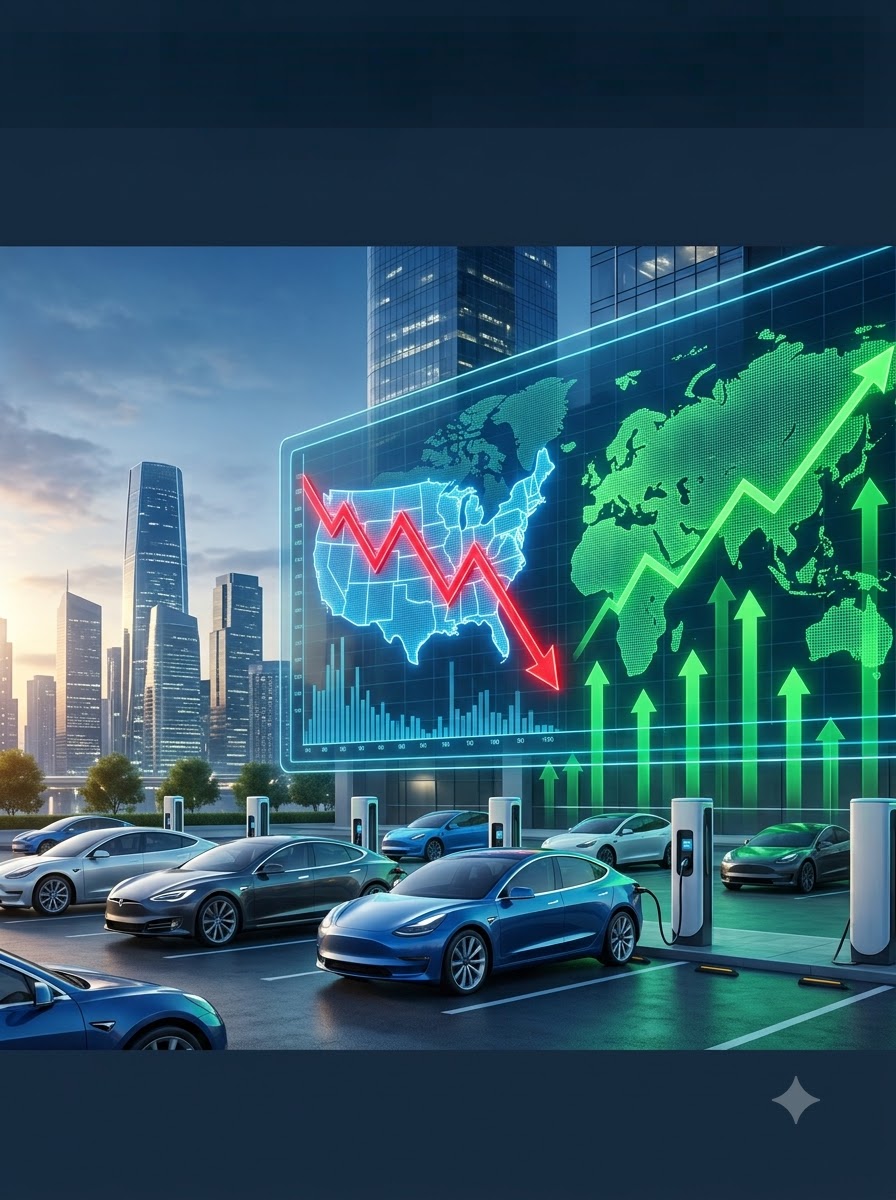
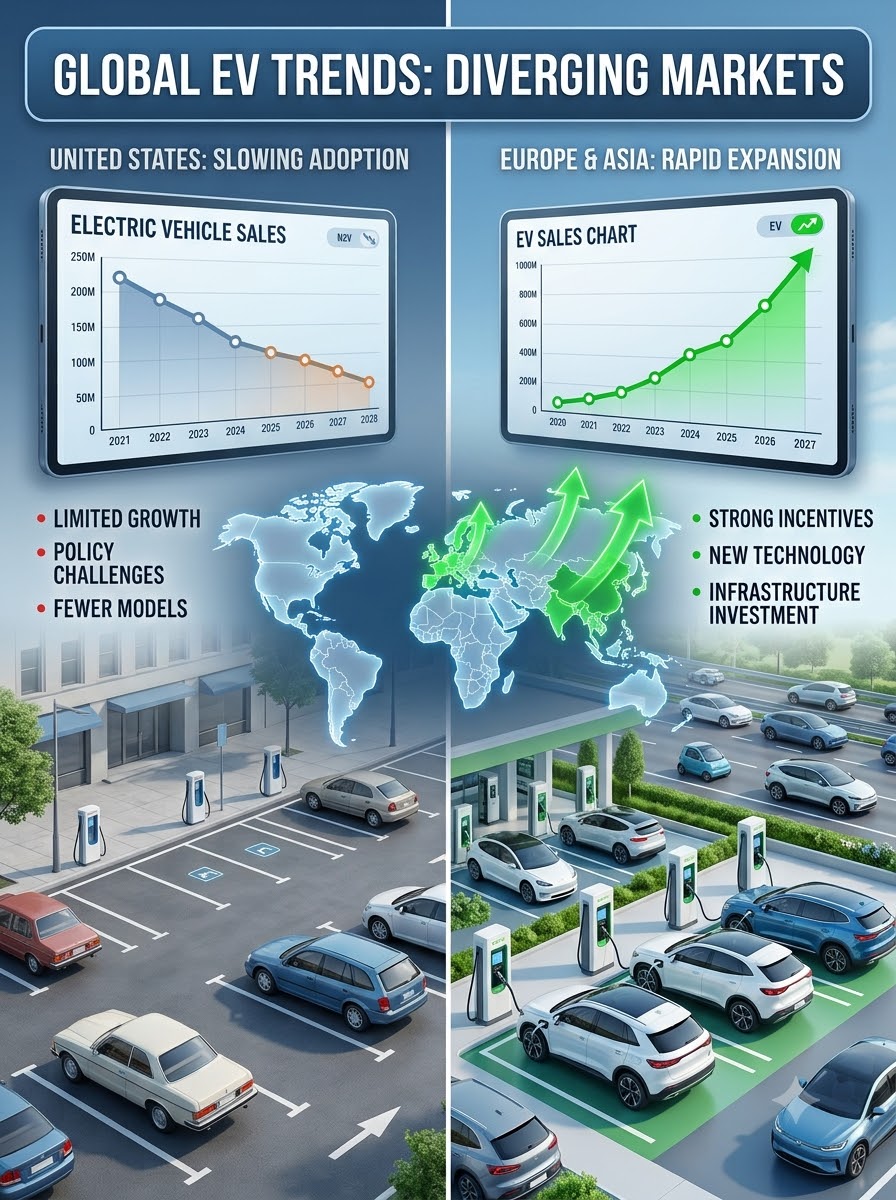
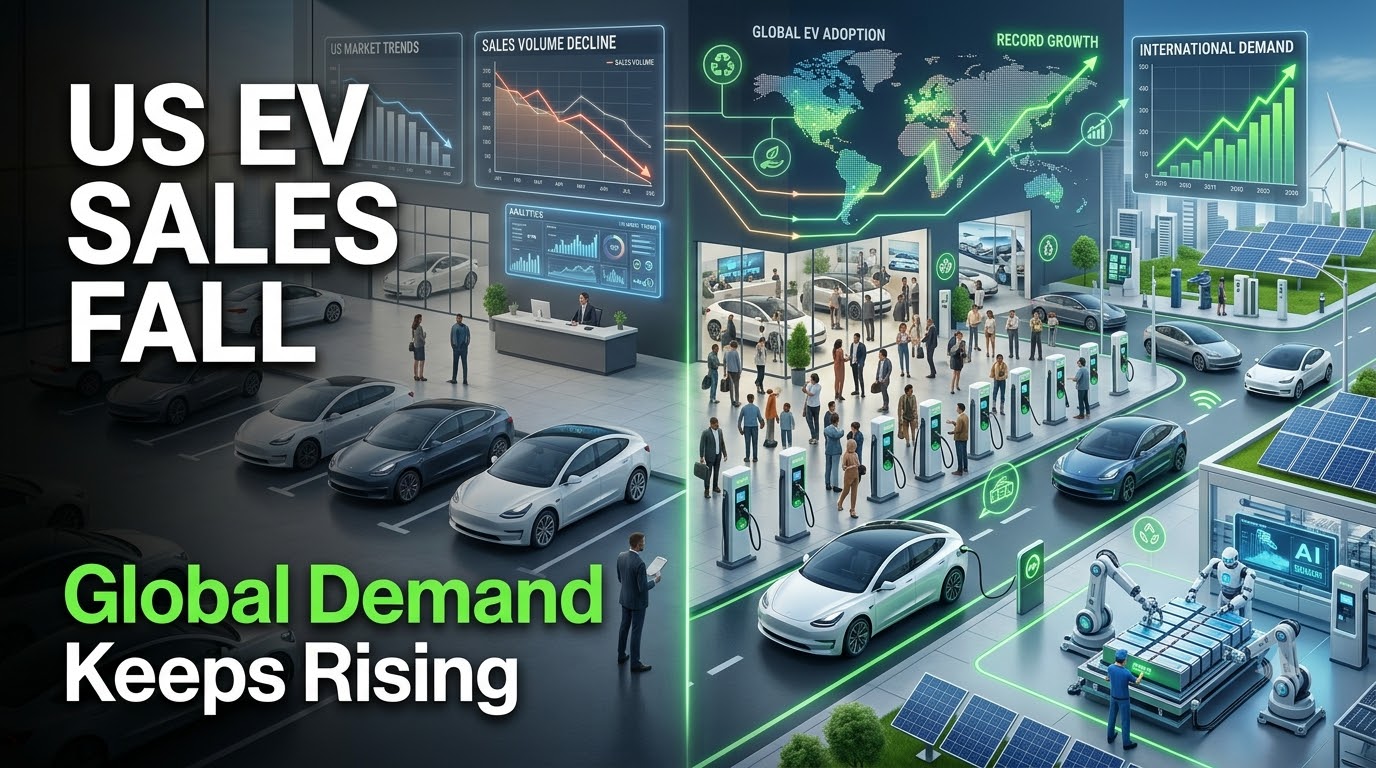
US electric vehicle sales fell 20% in the second quarter of 2026 compared to a year earlier, according to Cox Automotive — a sharp domestic pullback that stands in stark contrast to the global picture, where the International Energy Agency estimates pure battery electric vehicle sales climbed to roughly 14 million units last year, up from 11 million in 2024, with further growth expected in 2026. The divergence says as much about US-specific policy and market conditions as it does about the underlying health of electric vehicles as a category, and it's playing out alongside the kind of market-share battle already reshaping the industry — including BYD's recent reclaiming of the global EV sales lead from Tesla.
The US Numbers
| 📊 Metric | 📈 Figure |
|---|---|
| 🇺🇸 US EV Sales (Q2 2026 YoY) | 📉 -20% compared with the same quarter last year. |
| 🌍 Global Pure BEV Sales (2025) | Approximately 14 Million vehicles sold, up from 11 Million in 2024. |
| 🇨🇳 EV Share of China's Auto Sales (2025) | 55% of new vehicle sales, including PHEVs and extended-range EVs. |
| 💲 New EV Price Change (YoY) | Average new EV prices declined by 4.5% year-over-year. |
The drop follows the expiration of the federal EV tax credit, which had been driving a rush of purchases beforehand — one industry report noted EV sales jumped 26% in the month immediately preceding the credit's end, as buyers moved up planned purchases to capture the expiring incentive, an effect now working through as a steep year-over-year comparison in the following quarter.
Why the Picture Isn’t as Grim as the Headline Number
Cox Automotive and other industry analysts caution against reading the 20% decline as evidence that American EV demand is collapsing outright. Much of the drop reflects the tax credit's expiration pulling demand forward into the prior quarter rather than demand disappearing — a well-documented pattern whenever a purchase incentive has a known end date. Beneath the topline number, market conditions have actually become more favorable for buyers who are still in the market: new EV prices fell 4.5% year-over-year, creating what several outlets have described as a genuine buyer's market, with a wider selection of models across mainstream brands including Toyota, Chevrolet and Hyundai alongside Tesla's continued scale and Rivian's growing momentum.
Why Automakers Aren’t Pulling the Plug
Despite the sales pullback, US automakers have continued investing in EV development rather than retreating from the category — Ford CEO Jim Farley has been direct about the stakes, telling reporters the company sees itself in "a fight for our lives" against intensifying global competition. That competitive pressure is coming from multiple directions: Ford announced a partnership with Renault in December to develop a small, affordable EV for the European market, while separately pursuing a joint venture with Chinese automaker Geely to share production capacity at its underused Valencia, Spain plant — part of the same broader wave of Western-Chinese manufacturing partnerships reshaping how legacy automakers compete.
The Real Story Is Global, and It’s Increasingly Chinese
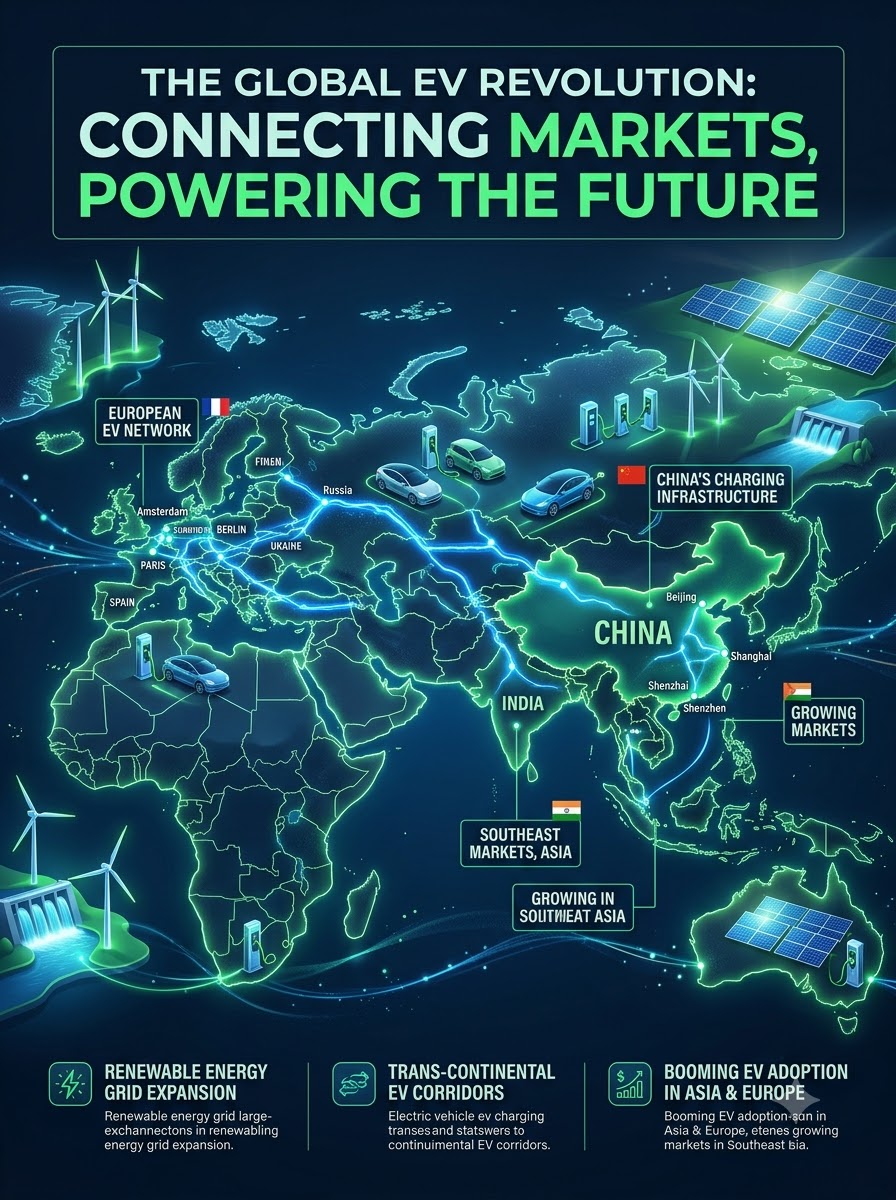
Much of the global EV growth the IEA is tracking is concentrated specifically in China, long the world's largest auto market. In 2025, 55% of Chinese auto sales were some form of EV — fully electric, plug-in hybrid, or extended-range EVs with gasoline-powered generators charging the battery — a penetration rate far beyond what the US or Europe has achieved. That domestic scale is what's allowed BYD to overtake Tesla as the world's largest EV maker, with the gap between the two companies continuing to widen even as Tesla posts strong individual quarters of its own.
Why This Matters for US Automakers Specifically
American manufacturers are increasingly navigating a split reality: a domestic market where EV demand has become more policy-dependent and price-sensitive following the tax credit's expiration, and a global market where Chinese competitors are scaling EV production and exports at a pace US and European automakers are struggling to match. That split is directly shaping strategic decisions — from Ford's European partnerships to the pricing and incentive strategies US dealers are now using to move inventory in a market where buyers currently hold more negotiating leverage than they have in recent years.
Industry Impact
The 20% US sales decline is prompting a genuine reassessment of near-term domestic EV demand forecasts, even as most industry analysts continue to expect long-term growth given falling prices and expanding model availability. For consumers currently shopping, the combination of falling prices and a wider model selection represents a rare moment of leverage — a dynamic that stands in sharp contrast to the supply-constrained, price-elevated conditions squeezing much of the broader consumer electronics and automotive component market this year.
Timeline
- 2024: Global pure battery electric vehicle sales reach approximately 11 million units.
- 2025: Global BEV sales climb to roughly 14 million units; BYD overtakes Tesla as the world's largest EV maker for the full year.
- Prior to expiration: US EV sales jump 26% month-over-month as buyers rush to claim the federal tax credit before it ends.
- Q2 2026: US EV sales fall 20% year-over-year following the credit's expiration, according to Cox Automotive.
- July 2026: New EV prices are down 4.5% year-over-year, creating more favorable buying conditions despite the sales pullback.
Future Outlook
Expect the US EV market to stabilize as the tax-credit-driven distortion works its way out of year-over-year comparisons over the coming quarters, with underlying demand likely settling into a more price- and product-driven pattern rather than one shaped primarily by an expiring federal incentive. Globally, the more consequential trend remains China's continued EV dominance — with 55% of its domestic auto sales already electrified, the gap between Chinese manufacturers like BYD and Western competitors is likely to keep widening unless US and European automakers can match both the pricing and production scale China has already achieved.
Frequently Asked Questions
Why did US EV sales fall 20% in Q2 2026?
Largely due to the expiration of the federal EV tax credit, which had pulled forward a surge of purchases in the preceding month, creating a steep year-over-year comparison.
Is global EV demand also declining?
No — the International Energy Agency estimates global pure battery electric vehicle sales rose to about 14 million in 2025, up from 11 million in 2024, with further growth expected in 2026.
Are EV prices falling in the US?
Yes — new EV prices are down 4.5% year-over-year, creating more favorable buying conditions for consumers despite the sales pullback.
What share of Chinese car sales are EVs?
55% in 2025, including fully electric, plug-in hybrid, and extended-range EVs.
Are US automakers scaling back their EV plans?
Not entirely — Ford CEO Jim Farley has described the competitive environment as "a fight for our lives," and the company continues pursuing EV partnerships including one with Renault and another with Geely.
Is now a good time to buy an EV in the US?
Falling prices and a wider selection of models across mainstream brands have created what several industry analysts describe as a genuine buyer's market, despite the overall sales decline.
How does BYD’s position relate to the US sales decline?
BYD's continued growth as the world's largest EV maker is occurring largely independent of the US market, driven primarily by strong domestic Chinese demand and international expansion.
Key Takeaways
- US EV sales fell 20% in Q2 2026 year-over-year, largely due to the expiration of the federal EV tax credit pulling forward prior demand.
- Global EV sales continue climbing, reaching an estimated 14 million units in 2025, driven heavily by Chinese demand.
- New EV prices in the US fell 4.5% year-over-year, creating more favorable buying conditions despite the sales pullback.
- US automakers continue investing in EVs and international partnerships despite the domestic sales decline, citing intensifying global competition.