From Consultation to Curfews in Four Months
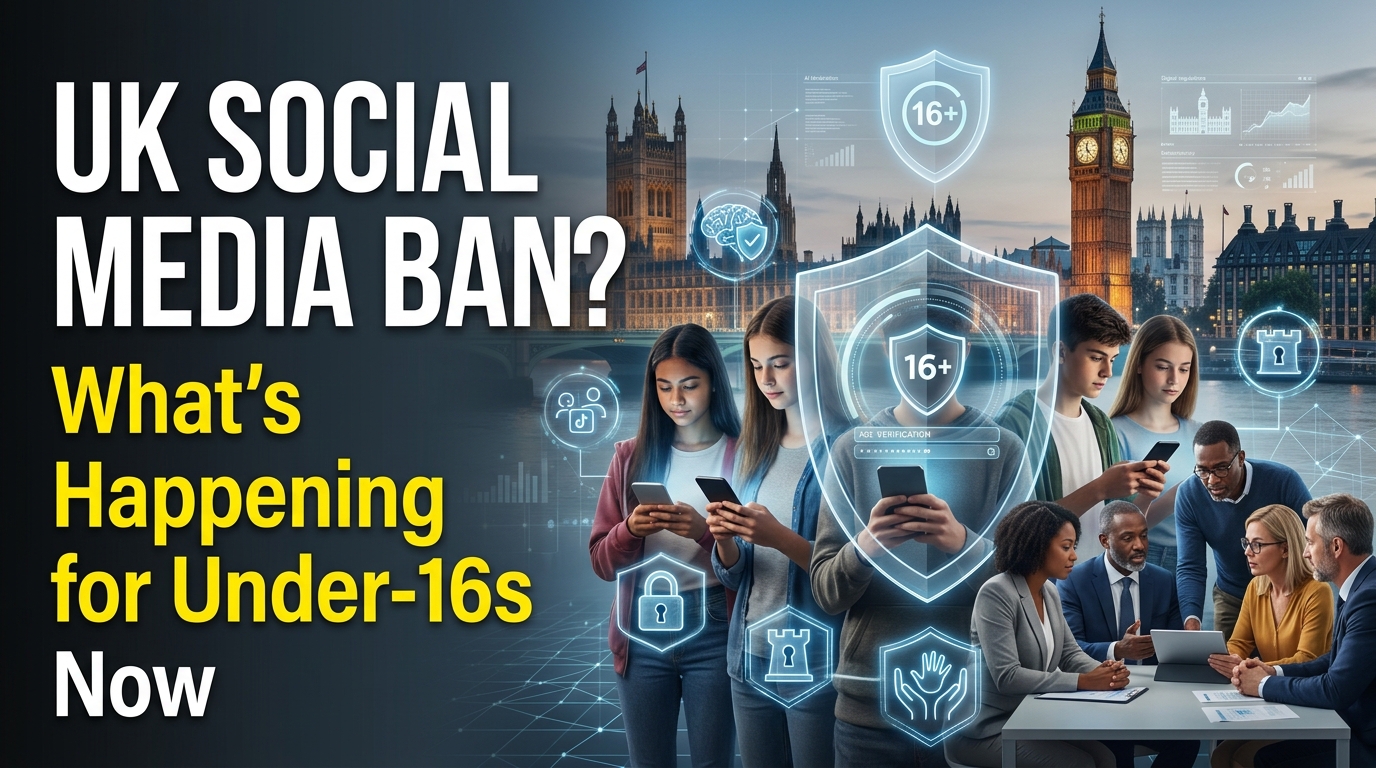
What started as a public consultation in March 2026 has moved with unusual speed through the UK's legislative machinery. By June, Prime Minister Keir Starmer had announced a formal ban on social media access for under-16s. By mid-July, the government had already switched on a related interim measure — overnight curfews for 16 and 17-year-olds — well before the core ban itself even takes effect.
What’s Actually Been Announced
| 🛡️ Measure | 👥 Who It Affects | 📅 Status |
|---|---|---|
| 🚫 Under-16 Social Media Ban | Users under 16 years old. | Announced June 15, 2026; expected to come into force by spring 2027. |
| 🌙 Overnight Curfews (Midnight–6 AM) |
16–17 year-olds. | Announced July 15, 2026; enabled by default. |
| ♾️ Infinite Scroll Restrictions | 16–17 year-olds. | Turned off by default alongside the overnight curfew measures. |
| 📹 Livestreaming & Stranger Messaging Limits | Users under 16 years old. | Included as part of the core social media ban package. |
The ban itself covers platforms including Snapchat, TikTok, YouTube, Instagram, Facebook and X — but notably excludes YouTube Kids and messaging services like WhatsApp and Signal, drawing a clear line between social platforms built around public content discovery and private communication tools.
Why the Government Moved Now
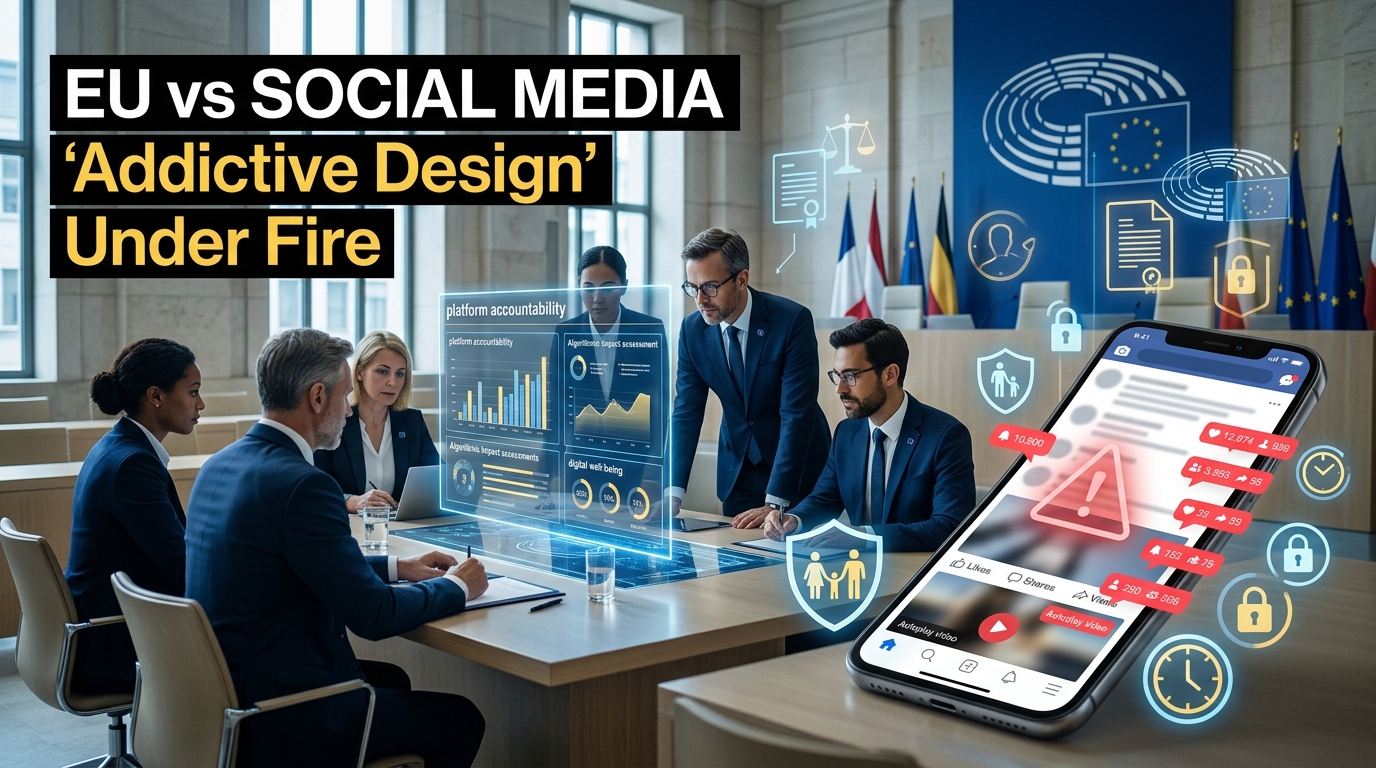
Starmer framed the decision in stark terms at the announcement, warning that children risk being pulled into what he called a world of endless scrolling, anxiety and comparison, and describing some platform content as dangerous and designed to be addictive — language that closely echoes the EU's own recent finding that Meta's infinite-scroll and autoplay features breach the Digital Services Act. The evidentiary backbone for the policy was a public consultation that ran March through May 2026, which the government says found nine in ten parents backing the intervention — a figure officials have repeatedly cited as their primary justification for the ban's scope and speed.
How the UK’s Approach Differs From Australia’s
The UK has explicitly modeled its core approach on Australia, which became the first country to implement an under-16 social media ban in December 2025. But UK officials have said their version goes further, extending restrictions to functions like livestreaming and stranger-to-stranger messaging that Australia's original ban didn't specifically target — reflecting concerns that raised the age threshold alone wouldn't address grooming and predatory contact risks that operate through in-platform messaging rather than public content feeds.
The Hard Part: Age Verification
None of this works without reliable age assurance, and that's the piece regulators are still actively working through. Ofcom, the UK's communications regulator, has been tasked with determining what counts as "highly effective" age verification for confirming someone is 16 or over, with findings expected by October 2026. Ofcom's own Group Director for Online Safety has already flagged that age assurance at 16 is technically feasible but has fewer proven methods available than verification at 18, and cited specific practical challenges around accuracy at boundary ages and how to handle child accounts as users "age into" eligibility.
Who Enforces This — and Who Doesn’t
Responsibility sits entirely with the platforms, not with parents. Social media companies will be legally required to verify a user is 16 or older before allowing account creation or access, and families face no penalties if a child circumvents the rules. Ofcom will handle enforcement against platforms directly, continuing its existing role under the Online Safety Act 2023, which the Children's Wellbeing and Schools Act 2026 amended in April to give the Secretary of State power to require internet service providers to restrict children's access to specific online services.
Industry and Global Context
The UK's move places it within a fast-growing group of countries tightening rules on youth social media access. Canada's culture minister introduced similar legislation days before the UK's announcement, proposing a comparable under-16 threshold alongside obligations for AI chatbot platforms to curb harmful content generation. France has separately advanced legislation to ban social media for under-15s. Industry critics of these bans broadly argue that blanket restrictions risk pushing children toward less-regulated online spaces with weaker safety infrastructure, while some child-safety advocates counter that platform-side accountability, rather than parental policing, is the only enforcement model likely to actually work at scale.
Timeline
- December 2025: Australia's under-16 social media ban takes effect, the first of its kind globally.
- January 2026: Starmer signals "all options are on the table" for a UK equivalent.
- March-May 2026: UK public consultation on children's social media use runs, drawing responses that show 9 in 10 parents backing a ban.
- April 29, 2026: The Children's Wellbeing and Schools Act 2026 comes into force, enabling the legal mechanism for the ban.
- June 15, 2026: The government formally announces the under-16 social media ban.
- July 15, 2026: Default overnight curfews and infinite-scroll restrictions for 16-17 year-olds are announced and switched on.
- October 2026 (expected): Ofcom publishes its findings on effective age verification methods.
- End of 2026 (targeted): Government aims for a parliamentary vote on the final regulations.
- Spring 2027: The ban is expected to formally take effect.
Future Outlook
The biggest open question isn't whether the ban happens — the political and public momentum behind it appears settled — but whether Ofcom's age-verification framework can be implemented accurately enough to avoid major loopholes at launch. Given how quickly the UK moved from consultation to interim curfew measures, expect the government to continue rolling out incremental restrictions ahead of the full spring 2027 deadline rather than waiting for every detail of the final framework to be resolved first.
Frequently Asked Questions
When does the UK’s under-16 social media ban take effect?
The ban is expected to be in force by spring 2027, following a planned parliamentary vote on the regulations by the end of 2026.
Which platforms are covered by the ban?
Snapchat, TikTok, YouTube, Instagram, Facebook and X are covered; YouTube Kids and messaging apps like WhatsApp and Signal are excluded.
Are 16 and 17-year-olds affected too?
Yes — separate measures announced July 15, 2026 impose default overnight curfews (midnight to 6am) and disable infinite-scroll-style features for 16-17 year-olds, distinct from the full ban applying to under-16s.
Who is responsible for enforcing the ban — parents or platforms?
Platforms. They must verify a user is 16 or older before granting account access; families face no penalties if a child circumvents the rules.
How will platforms verify a user’s age?
Ofcom is researching "highly effective" age assurance methods for confirming users are 16 or older, with findings expected by October 2026.
Is the UK ban similar to Australia’s?
It's modeled on Australia's approach but goes further by also restricting livestreaming and stranger-to-stranger messaging for under-16s.
What happens if a child gets around the ban?
There are no penalties for families or children; enforcement responsibility rests entirely with the platforms.
Key Takeaways
- The UK's under-16 social media ban, announced June 15, 2026, is expected to take effect by spring 2027.
- Interim measures — overnight curfews and disabled infinite-scroll features for 16-17 year-olds — are already live as of July 15, 2026.
- The ban goes beyond Australia's model by also restricting livestreaming and stranger messaging for under-16s.
- Reliable age verification remains the biggest unresolved implementation challenge, with Ofcom's findings due October 2026.
References
- NPR
- Al Jazeera
- House of Commons Library
- Wilson Sonsini
- AO Shearman