Your Storefront Isn’t Where the Sale Starts Anymore
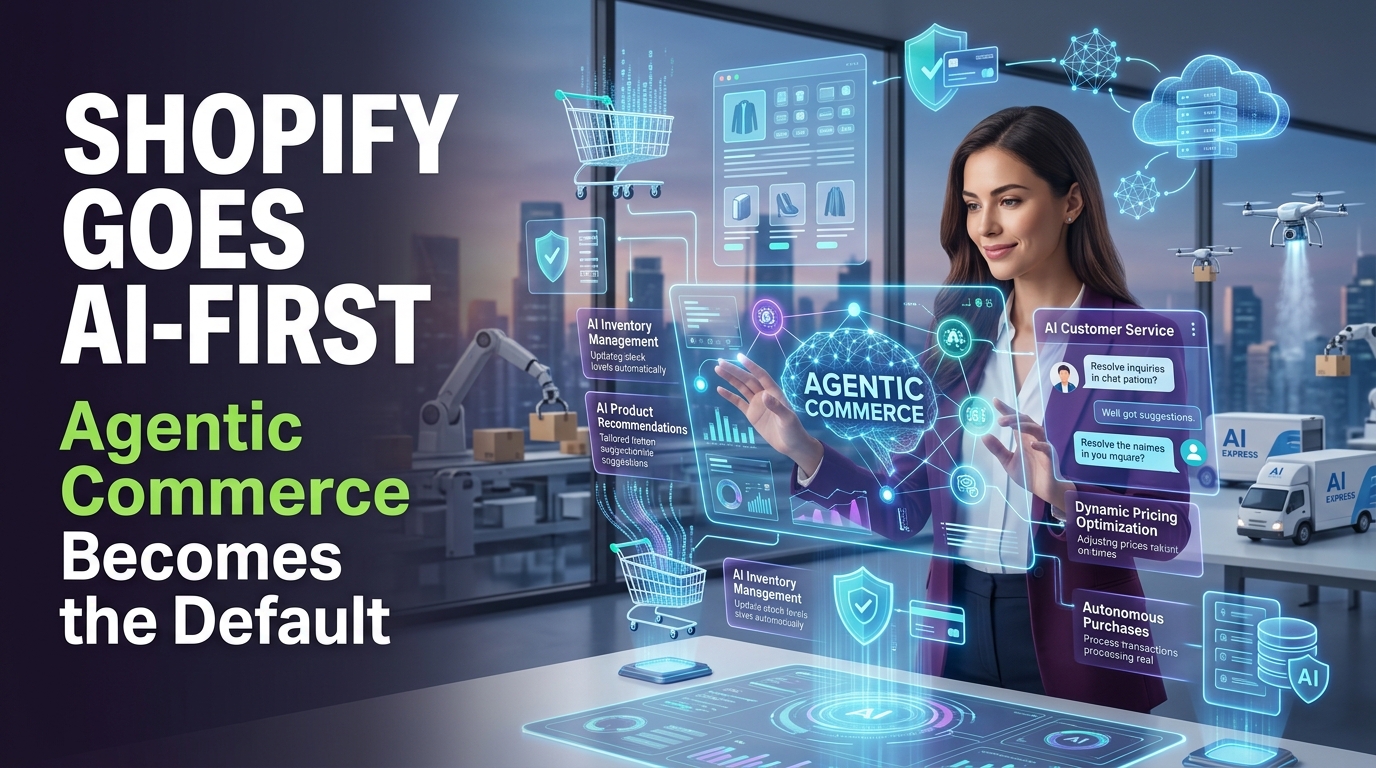
Shopify's biggest release of the year landed on June 17, 2026, and CEO Tobi Lütke didn't bury the headline: commerce now has to show up everywhere a customer already is — which in 2026 increasingly means inside ChatGPT, Microsoft Copilot and Gemini, not just on a merchant's own website. The Summer '26 Editions release shipped more than 150 updates in a single drop, and the through-line connecting nearly all of them is that AI agents, not just human shoppers, are now a first-class audience for every Shopify store.
What “Agentic Commerce, On by Default” Actually Means
The Universal Commerce Protocol
The centerpiece of the release is the Universal Commerce Protocol (UCP), which exposes a merchant's catalog to AI shopping agents automatically, with no manual setup required. Eligible products now auto-syndicate to ChatGPT, Microsoft Copilot, Google AI Mode, Gemini and Shopify's own Shop app — meaning a shopper can discover and complete a purchase of a merchant's product entirely inside an AI assistant, without ever visiting the merchant's actual website.
Shopify Catalog
A new structured data layer standardizes product information — titles, prices, availability, images and policies — specifically so AI agents and external platforms can read it accurately. Product data quality becomes the foundation for these agentic channels: incomplete or inconsistent attributes directly limit how well a product performs when an AI agent is assembling recommendations or a cart on a shopper's behalf.
Native AI Merchandising
Collection sorting, cross-sell logic, and merchandising insights that used to require third-party apps now live directly inside Shopify's admin, moving product-ranking logic in-house rather than depending on external tooling.
What This Redefines: “Traffic” No Longer Means What It Used To
The strategic shift Shopify is describing is genuinely structural, not just a feature update. Merchants have historically optimized for a human scrolling through a collection page. Now they're also optimizing for machines that read structured product data and build shopping carts autonomously on a customer's behalf — a fundamentally different kind of "visit" that doesn't show up as a typical website session at all.
The Bigger Ecosystem Move
| 🚀 Development | 📅 Date | ⭐ Significance |
|---|---|---|
| 🛍️ Shopify Editions Summer '26 Launch | June 17, 2026 | Introduced 150+ updates, making UCP and agentic commerce default capabilities. |
| ☁️ AWS AgentCore Goes GA | June 17, 2026 | Amazon Bedrock AgentCore Payments positioned as the standard infrastructure for autonomous purchases. |
| 🤝 Shopify × Trustpilot Partnership | June 27–29, 2026 | Verified reviews embedded directly into storefronts as trust signals for AI-powered shopping platforms. |
| 🎁 Kate Spade AI Gift Concierge Launch | ~June 2026 | Became the first major retailer live on Amazon's agentic shopping infrastructure. |
| ⚙️ Legacy Shopify Scripts Sunset | June 30, 2026 | Merchants required to migrate custom business logic to Shopify Functions. |
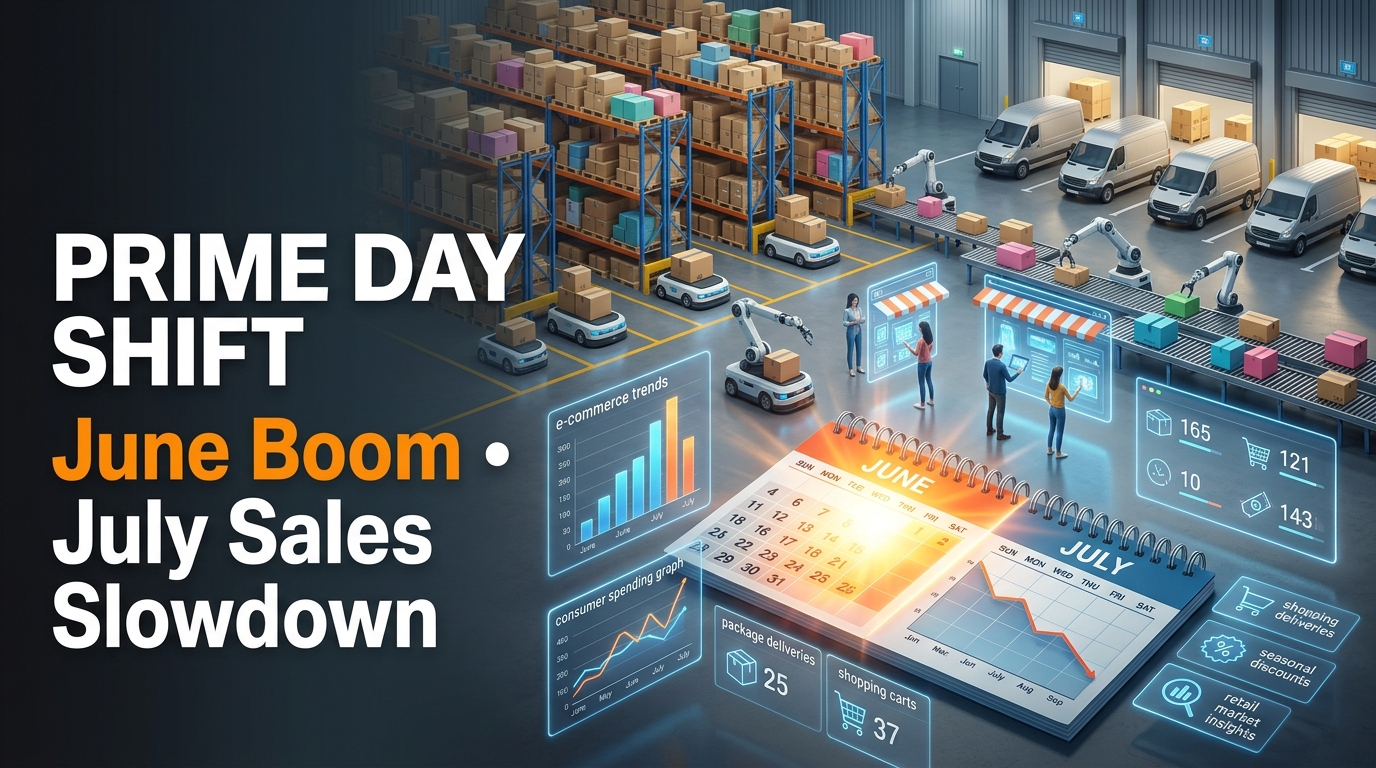
Amazon isn't sitting this out either. AWS moved its Bedrock AgentCore infrastructure from preview into production-grade tooling the same week as Shopify's release, with AgentCore Payments positioned as the canonical way autonomous agents complete purchases, and an Alexa-based shopping endpoint already live for consumers — a competitive push that's unfolding just weeks after Amazon's own Prime Day calendar shift generated a record $26.4 billion in sales. Tapestry's Kate Spade brand became the first major retailer to launch on the technology, building an AI Gift Concierge that turns a loosely described occasion and budget into concrete product recommendations — a genuinely different shopping flow than browsing a category page.
Why Reviews and Trust Signals Matter More Now
Shopify's Trustpilot integration reflects a broader emerging pattern: when an AI agent decides which product even gets shown to a shopper, verifiable third-party signals like independent reviews are becoming a ranking input in roughly the same way backlinks shaped visibility in traditional search. Reporting has already noted a sharp increase in click-throughs to Trustpilot-verified listings coming specifically from AI shopping platforms, reinforcing that trust infrastructure — not just product data — is becoming part of how agents select winners.
Industry Impact
For merchants, the practical shift is that structured, complete, accurate product data has gone from a nice-to-have SEO practice to a direct commerce requirement. A product with missing attributes, inconsistent pricing across channels, or thin policy information risks simply not appearing when an AI agent assembles a cart or comparison — regardless of how well that same product might perform with a human browsing the merchant's own site directly.
Expert Analysis
The parallel moves from Shopify and Amazon in the same week aren't coincidental — both companies are racing to become the default commerce layer underneath AI assistants before that role gets defined by someone else, whether that's OpenAI, Microsoft, or Google building their own end-to-end purchasing flows. The strategic risk for merchants who don't adapt quickly is being effectively invisible inside an increasingly important discovery channel, even while their traditional website traffic looks stable.
Timeline
- June 17, 2026: Shopify Editions Summer '26 ships, with agentic commerce and the Universal Commerce Protocol on by default; AWS AgentCore goes GA the same day.
- ~June 2026: Kate Spade launches its AI Gift Concierge, the first major retailer live on Amazon's agentic shopping stack.
- June 27-29, 2026: Shopify and Trustpilot's review-embedding partnership goes live.
- June 30, 2026: Legacy Shopify Scripts stops running, requiring migration to Shopify Functions.
- July 2026: Reporting confirms rising AI-platform-driven click-throughs to Trustpilot-verified listings.
Future Outlook
Expect "agent readiness" — complete structured product data, verified third-party trust signals, and full API accessibility — to become as standard a commerce checklist item as basic SEO was a decade ago. Merchants who treat this release as an optional feature to explore later risk losing visibility in a discovery channel that's expanding quickly, while those who prioritize clean, complete catalog data now are positioned to benefit disproportionately as AI-mediated shopping keeps growing its share of overall retail discovery.
Frequently Asked Questions
What is the Universal Commerce Protocol?
A Shopify feature that automatically exposes a merchant's product catalog to AI shopping agents like ChatGPT, Copilot and Gemini, with no manual setup required.
Can customers actually buy products directly inside ChatGPT or Gemini now?
Yes — eligible Shopify products auto-syndicate to these AI platforms, letting shoppers discover and purchase without visiting the merchant's own website.
What happened to Shopify Scripts?
Legacy Shopify Scripts stopped running on June 30, 2026; merchants needed to migrate that custom logic to Shopify Functions.
Is Amazon doing something similar to Shopify’s agentic commerce push?
Yes — AWS moved its Bedrock AgentCore infrastructure to general availability the same week, with AgentCore Payments positioned as the standard for autonomous AI-driven purchases.
Why does Shopify’s Trustpilot partnership matter for AI shopping?
Verified third-party reviews are becoming a ranking signal for AI shopping agents, similar to how backlinks influenced traditional search rankings.
What should merchants do first in response to this shift?
Prioritize complete, accurate, structured product data — titles, pricing, availability, images and policies — since AI agents rely on that data to select and recommend products.
Who was the first major retailer to launch on Amazon’s agentic shopping technology?
Kate Spade, whose parent company Tapestry built an AI Gift Concierge using AWS's agentic shopping infrastructure.
Key Takeaways
- Shopify's Summer '26 Editions makes agentic commerce the default, letting AI agents discover and complete purchases without a storefront visit.
- Amazon launched competing agentic shopping infrastructure the same week via AWS Bedrock AgentCore.
- Structured, complete product data has become a direct commerce requirement, not just an SEO best practice.
- Verified third-party trust signals like reviews are emerging as a key ranking factor for AI shopping agents.
References
- Shopify Editions Summer '26 announcement
- Nova Analytics
- Memeburn
- PYMNTS / Bloomberg (via Nova Analytics)