The Trend That’s Defined by Doing Less
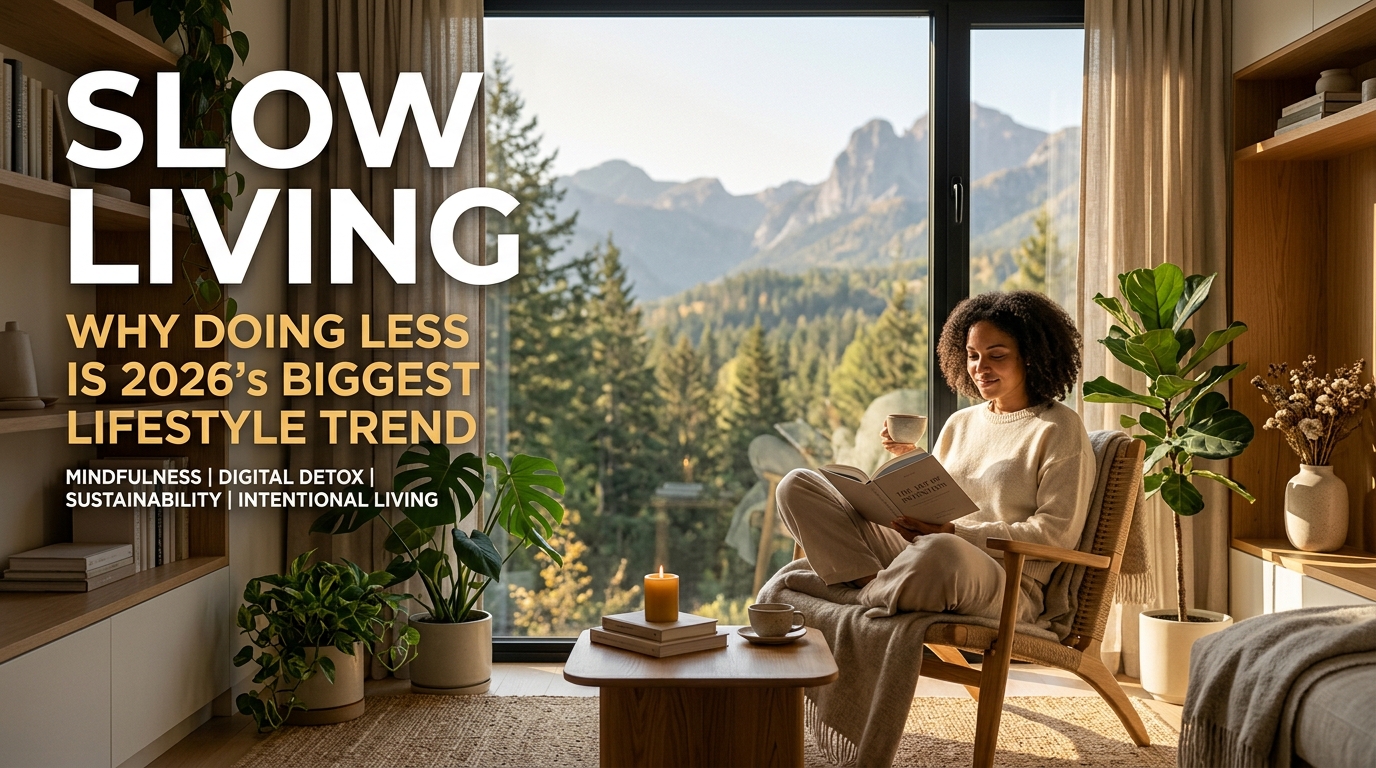
For a lifestyle trend, "slow living" is an unusual one to track — there's no product to buy, no app to download, no specific routine to follow. And yet it's showing up consistently across nearly every major trend report published for 2026, from global agency research to consumer trend forecasting, all converging on roughly the same observation: after years of relentless optimization, curated perfection and hustle culture, people are deliberately choosing to slow down.
What “Slow Living” Actually Means in Practice
Unlike vague wellness buzzwords, the trend reports describing slow living point to specific, observable shifts in how people are spending time and money:
- Solo culture — more people choosing solo dining, solo travel and solo hobbies as intentional choices rather than fallback options
- Analog hobbies — a documented return to hands-on activities like film photography, letter writing, journaling and craft-based pastimes
- Small, deliberate celebrations — scaled-down gatherings that favor presence over spectacle
- Embracing imperfection — a shift away from the "curated perfection" aesthetic that dominated social media in prior years
- Intentional rest — treating downtime as a boundary rather than an occasional luxury
Why Researchers Say This Is Happening Now
VML's Future 100 report, one of the industry's most closely watched annual trend studies, frames the shift as a direct response to accumulated pressure: after a year marked by economic upheaval, polarizing political currents and environmental setbacks, people are prioritizing resilience and meaning over spectacle. The report's global consumer survey found 88% of people want experiences that feel genuinely meaningful rather than merely entertaining — actively seeking moments that inspire awe, wonder or a renewed perspective, rather than passive content consumption.
It’s Not Just One Report Saying This
| 📚 Source | 🔎 Key Finding |
|---|---|
| 🌍 VML Future 100 | 88% of people globally want meaningful experiences rather than experiences focused only on entertainment. |
| 📊 Euromonitor International Global Consumer Trends |
Consumers are prioritizing holistic wellbeing amid global challenges, with authenticity becoming a key driver of brand loyalty. |
| 🔮 Mega Lifestyle Forecast | Culture is shifting toward intention over polish and presence over performance. |
| 💪 Dr. Axe Wellness Trends | "Movement snacks" and shorter, flexible activities are replacing long, infrequent structured workout routines. |
The consistency across independent research organizations — spanning advertising, market research, and wellness-focused publishers — suggests this isn't a single agency's marketing narrative but a genuinely observed shift in consumer sentiment across multiple, methodologically distinct surveys.
A Reaction Against a Specific Prior Era
Trend researchers are explicit that slow living is defined largely in opposition to what came before it. The "optimization, productivity, and curated perfection" era of the early-to-mid 2020s — dominated by productivity culture, aesthetic social media curation, and relentless self-improvement content — appears to have generated real fatigue. The Mega Lifestyle Forecast describes the resulting shift succinctly: living well is becoming less about spectacle and more about meaning, focused on how time is spent, who it's spent with, and what's allowed to remain imperfect.
How This Shows Up in Everyday Choices
Rest as a Boundary, Not a Reward
Rather than treating rest as something earned after sufficient productivity, the emerging pattern treats unstructured downtime as a non-negotiable part of a well-lived week — a genuinely different framing from the "earn your rest" messaging that dominated wellness culture in recent years.
Hands-On Hobbies Return
Analog, tactile hobbies are being adopted specifically because they lack the optimization and metrics built into most digital activities — there's no follower count, streak, or leaderboard attached to hand-writing a letter or developing film.
Fitness and Wellness Follow the Same Pattern
The shift extends into fitness specifically: rather than long, infrequent, intense workout sessions, 2026 wellness trend research points to "movement snacks" — short, flexible bursts of activity woven throughout the day — as a more sustainable alternative that fits into a slower, less rigidly scheduled lifestyle. Japanese walking's surge in popularity this year fits this same pattern almost exactly: no gym, no equipment, just a low-friction routine that slots into an ordinary day.
Industry Impact
Brands and marketers are adjusting messaging accordingly, moving away from productivity-and-optimization framing toward language emphasizing presence, authenticity and imperfection. Euromonitor's research specifically flags authenticity and self-expression as key drivers of brand loyalty for 2026, suggesting companies leaning into polished, aspirational-perfection marketing may increasingly be working against, rather than with, where consumer sentiment is heading.
Expert Analysis
Trend researchers frame this less as a rejection of ambition or productivity altogether and more as a recalibration of what a well-lived life is actually built around. The Mega Lifestyle Forecast's framing captures the nuance well: slowness isn't presented as opting out of engagement with the world, but as choosing differently — and choosing more deliberately — within it.
Timeline
- Early 2020s: Hustle culture, productivity optimization and curated social media perfection dominate lifestyle and wellness discourse.
- 2024-2025: Early signals of fatigue with optimization culture begin appearing in wellness and consumer research.
- Late 2025: VML and Euromonitor begin publishing 2026 trend forecasts identifying the shift toward meaning and authenticity.
- January-July 2026: Multiple independent trend reports converge on slow living, analog hobbies and intentional rest as defining 2026 lifestyle patterns.
Future Outlook
Given how consistently independent research organizations are converging on the same underlying observation, expect slow living to continue shaping consumer behavior, marketing language and even workplace wellness programming through the rest of 2026 rather than fading as a short-lived trend cycle. The more interesting open question is whether this represents a durable cultural recalibration or simply a temporary correction that swings back toward optimization culture once the specific economic and political pressures researchers cite as drivers ease.
Frequently Asked Questions
What is the “slow living” trend?
A 2026 lifestyle trend characterized by intentional rest, analog hobbies, solo activities, smaller celebrations, and embracing imperfection over curated perfection and constant optimization.
Why is slow living trending in 2026?
Trend researchers attribute it to accumulated fatigue from economic upheaval, political polarization, and years of hustle-culture optimization, driving a desire for more meaningful, less performance-driven living.
Is slow living just one trend report’s idea?
No — multiple independent trend research organizations, including VML, Euromonitor, and wellness-focused publishers, have identified similar patterns in separate 2026 studies.
How does slow living show up in fitness trends?
Through "movement snacks" — short, flexible bursts of activity throughout the day — replacing longer, more rigidly scheduled workout sessions.
Does slow living mean people are becoming less ambitious?
Trend researchers frame it as a recalibration of what a well-lived life looks like, not a rejection of ambition or engagement with the world.
What percentage of people want more meaningful experiences?
VML's Future 100 report found 88% of people globally want experiences that feel meaningful rather than just entertaining.
How are brands responding to this trend?
Marketing is shifting toward authenticity and self-expression rather than polished, aspirational-perfection messaging, per Euromonitor's 2026 consumer trends research.
Key Takeaways
- Slow living — intentional rest, analog hobbies, and smaller celebrations — has emerged as a defining 2026 lifestyle trend across multiple independent trend reports.
- The shift is framed as a reaction to years of hustle culture and curated social media perfection.
- 88% of people globally want experiences that feel meaningful rather than simply entertaining, per VML's Future 100 report.
- The trend extends into fitness and wellness through "movement snacks" and other flexible, less rigidly scheduled approaches.
References
- VML Future 100
- Euromonitor International
- Mega Lifestyle Forecast
- Dr. Axe Wellness Trends 2026